Wednesday, March 18, 2015


March 18, 2015
STR logo resized  

Updates & Info

Quick Links 

   
Forward to a Friend

Join Our Mailing List


The end of March brings opportunities to attend readings and workshops by two special guest poets: Tim Seibles andSholeh Wolpé! Here's the line up: 
And as April fast approaches, help us spread the word about the 2nd Freedom Plow Award for Poetry & Activism  and be sure to purchase your tickets before the April 2 reception and ceremony! Hearing about our honoree, Mark Nowak, and all of this year's finalists is sure to inspire you. Just check out the interview of one of this year's finalists, John Lee Clark, on our blog!

We hope to see you at one of an upcoming events! All the details are below.

In Peace & Poetry,
Split This Rock 

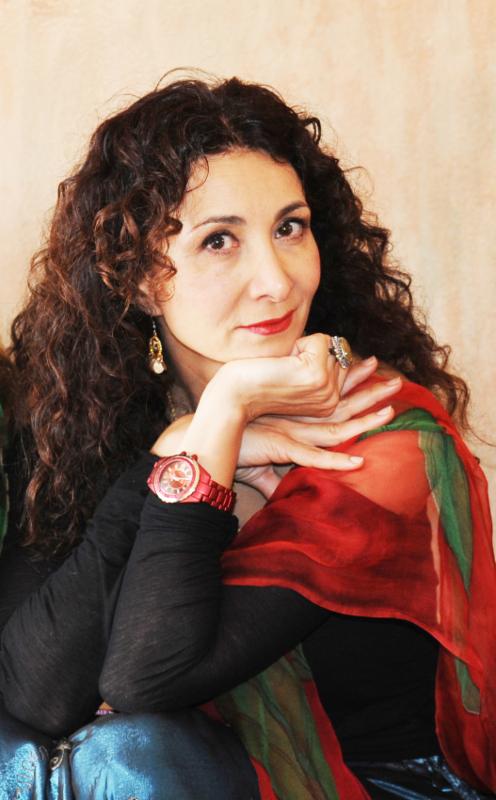
sholeh
 
Sholeh Wolpé Workshop

March 18, 6:30 - 8:30 pm 
1112 16th St, NW 
6th Floor Conference Room
FREE

Are you in search of an opportunity to  connect with other writers,  practice your craft, and  grow as a writer? You're invited to join us for a FREE writing workshop on March 18. We'll bring the writing prompts. You bring the creativity! No RSVP required - drop in. Open to ALL ages and levels of experience.  Presented by Split This Rock and Beltway Poetry Slam. 
Sholeh Wolpé Reading

Thursday, March 19, 7:00pm 
Upshur Street Books
827 Upshur Street, NW
 Washington, DC 20011

Sholeh Wolpé is a poet, writer, editor and literary translator whose work transcends the boundaries of language, gender, ethnicity and nationality. Born in Iran, she spent most of her teen years in Trinidad and the UK before settling in the United States. She currently lives in Los Angeles.

Wolpé has authored three collections of poetry, The Scar Saloon, Rooftops of Tehran, and Keeping Time with Blue Hyacinths. She is the editor of two anthologies, Breaking the Jaws of Silence, which gathers American voices of protest, and The Forbidden: Poems from Iran and Its Exiles. Her books of translations include, Sin: Selected Poems of Forugh Farrokhzad and a Persian translation of Walt Whitman's Song of Myself (co-translated with Mohsen Emadi), commissioned by the University of Iowa's International Writing Program in celebration of Whitman's work.

Wolpé's accolades include the 2014 Pen/Heim award, 2013 Midwest Book Award and 2010 Lois Roth Persian Translation prize. Her poems have been widely anthologized and translated into several languages. Visit her website for more information!

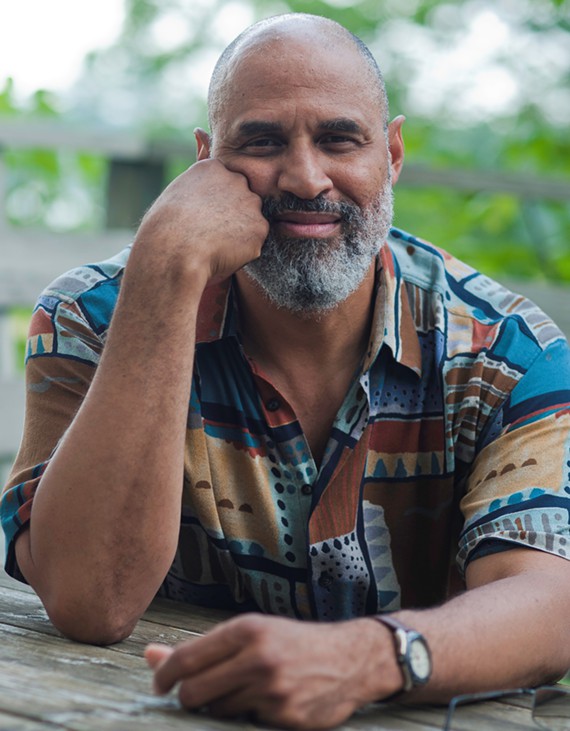
timseibles
 

Tim Seibles Workshop 
Living in Color: Writing Through the Lens of Race 

Wednesday, March 25, 5:30 - 7:30pm
Busboys and Poets Takoma
235 Carroll St, NW
Washington, DC 20012
FREE

In this workshop, attendees will briefly examine a few poems that address the experience of living with skin color
in this society, then discuss the need for and potential of such writing. This will be followed by writing
exercises that will facilitate honest engagement with the subject from many perspectives. Because all
 people  are affected by racialized thinking, it is Tim's hope that people from all across the color spectrum will attend.

Presented by Split This Rock and the Clarice Smith Center for the Performing Arts at the University of Maryland, as part of At War With Ourselves, a major event scheduled for September, 2015, marking the 150th anniversary of the Civil War. RSVP and learn more at the Clarice Smith Center's website.

seiblesreadingTim Seibles Poetry Reading

Thursday, March 26, 7:00pm
Upshur Street Books
827 Upshur Street, NW
Washington, DC 20011
FREE

Tim Seibles, born in Philadelphia in 1955, is the author of several poetry collections including Hurdy-Gurdy, Hammerlock, and Buffalo Head Solos.  His first book, Body Moves, (1988) has just been re-released by Carnegie Mellon U. Press as part of their Contemporary Classics series.  His latest, Fast Animal, was one of five poetry finalists for the 2012 National Book Award.  In 2013 he received the Pen Oakland Josephine Miles Award for poetry and received an honorary Doctorate of Humane Letters from Misericordia University for his literary accomplishments. Most recently, he received the Theodore Roethke Memorial Poetry Award for Fast Animal, given triennially for a collection of poems.

During the spring semester of 2010, Tim was poet-in-residence at Bucknell University.  A National Endowment for the Arts fellow, he also enjoyed a seven-month writing fellowship from the Provincetown Fine Arts Work Center in Massachusetts.  His poetry is featured in several anthologies; among  them are:  Rainbow Darkness; The Manthology; Autumn House Contemporary American Poetry;Black Nature; Evensong; Villanelles; and Sunken Garden Poetry. His poem "Allison Wolff" was included in Best American Poetry 2010 and, most recently, his poem "Sotto Voce: Othello, Unplugged" was featured in Best American Poetry 2013.

He has been a workshop leader for Cave Canem, a writer's retreat for African American poets, and for the Hurston/Wright Foundation, another organization dedicated to developing Black writers. Tim is visiting faculty at the Stonecoast MFA in Writing Program sponsored by the University of Southern Maine.  He lives in Norfolk, Virginia, where he is a member of the English and MFA in writing faculty at Old Dominion University.

freedom
The logo of Split This Rock's Freedom Plow Award for Poetry & Activism
Reception, Reading & Award Ceremony
Thursday, April 2, 6pm
Arts Club of Washington
2017 I St, NW
 Washington, DC 20006

BUY TICKETS  HERE!

Please join Split This Rock & The CrossCurrents  Foundation as we present the  2015 Freedom Plow Award for Poetry & Activism  to MARK NOWAK  for his work fostering and facilitating poetry  dialogues among workers around the globe.
  
Finalists for the award are Black Poets Speak Out/Amanda Johnston, Mahogany Browne, Jonterri Gadson, for mobilizing poets to stand against police brutality; John Lee Clark for his translation of ASL poetry and advocacy for poets with disabilities; and Bob Holman, for his work documenting at-risk languages.

The Freedom Plow Award for Poetry & Activism, sponsored by the CrossCurrents Foundation and cosponsored by the Arts Club of Washington and FOLIO Magazine, recognizes and honors a poet who is doing innovative and transformative work at the intersection of poetry and social change. The award, judged this year by Sheila Black, Martha Collins, and E. Ethelbert Miller, is being given for the second time in 2015.

Read more about Mark Nowak and the award on ourwebsite.

SAVE THE DATE!
Split This Rock Poetry Festival 2016:
Poems of Provocation & Witness
April 14-17, 2016 
Support Split This Rock 

Please support Split This Rock and help bring poetry to the center of public life - where it belongs! Donations are fully tax-deductible. 

Click here to donate. Or send a check payable to "Split This Rock" to: Split This Rock, 1112 16th Street NW, Suite 600, Washington, DC 20036. Many thanks!

Contact info@splitthisrock.org for more details or to become a sponsor.

Split This Rock
www.SplitThisRock.org
202-787-5210 info@splitthisrock.org

Newsmax.com


Breaking from Newsmax.com

Likud Win Adds to WH Difficulties
With Israeli Prime Minister Benjamin Netanyahu's Likud Party coasting to a stunning victory in Tuesday's elections, the White House is bracing itself for the continuation of tensions that have reached an all-time high in recent weeks, according to reports.

Read More Here

WHERE DID YOU SAY YOU WERE FROM?


Reading about the Great Migration of African Americans to the North in the early 1900s.
Back then the Chicago Defender newspaper had advice for new migrants.
Here are a few suggestions they had:

- Don't use vile language in public places.
- Don't act discourteously to other people in public places.
- Don't allow yourself to be drawn into street brawls.
- Don't live in unsanitary houses or sleep in rooms without proper ventilation.
- Don't leave your job when you have a few dollars in your pocket.

Boy, this sounds like good advice in 2015. Can I get a show of hands?

E- NOTE TO A FRIEND AFTER THE ELECTION

Yes.. this happens. But one has to focus on the hope - always the hope. This is what struggle is about. The election was close which means people want change they just don't have the numbers yet. Bibi still has to govern. He made statements to get re-elected. He might distance himself from the Right by this evening. This is politics not peace. I think his relationship with the Obama administration is about over...To say No to a Palestinian State just works right into the hands of bad guys in the Middle East. How can Palestinians sit down with Israel?  The paper bridge has been torn in half. We might be looking at more darkness before the light. Writers must hold candles or else we might think the current blackness is blindness.

Tuesday, March 17, 2015

MOROWA YEJIDE

MOROWA YEJIDE photo by Ethelbert


Spring in the air. I spent the early afternoon at Busboys and Poets (Takoma Park) talking with Morowa Yejide. Morowa is the author of TIME OF THE LOCUST, a novel many people have been talking about. She's also the daughter of an old friend. Here is a link to Morowa's website:

http://www.morowayejide.com/

WELCOME BACK TO THE EAST BEV...


ST. PATRICK'S DAY

Black man
wearing nothing
but green

red light
keeping him
on a corner


  - E. Ethelbert Miller

Monday, March 16, 2015

LA CASA

Today I went to Target (Columbia Heights) to pick-up a few office items. When I came out of the store I decided to go around the corner to La Casa (1444 Irving Street, NW). Here is where Friendship Place is working to rebuild lives and end homelessness by providing permanent housing for men in need.

My poem "Men Made Strong By Love" is on the wall in the lobby. Joyce Washington (Operations Specialist) was kind enough to give me an overview of the "Miracle on Irving." La Casa seems to be an excellent model for helping people who simply need help. It was an honor to contribute a few words of compassion and love to this site. What else is poetry for?


The amazing Elizabeth Dausch came by my house last Friday and did a video interview. She's making a short doc about the Parkmont School Poetry Festival. Over the years I've been a festival judge for the school. It's an opportunity to help young voices find their way; poetry is often a path to self-discovery. Elizabeth is a woman who keeps her eyes on the world. So much fun meeting her...

http://www.edausch.com/

ORNETTE


Listen to Ornette with your third ear. Let your eyes keep watch on the other two.
http://www.jazzonthetube.com/videos/ornette-coleman/in-berlin.html


Sunday, March 15, 2015

I'm still putting bookcases in order. It was fun this morning looking at a couple of shelves of anthologies from years ago. My favorite is still GIANT TALK edited by Quincy Troupe and Rainer Schulte. But hey- now I'm looking at a beautiful copy of PREMONITIONS: THE KAYA ANTHOLOGY OF NEW ASIAN NORTH AMERICAN POETRY edited by Walter K. Lew.
I need to dive back into this book. Wow... when was the last time I saw Cyn Zarco? A few months ago Arthur Sze sent me an awesome poem for Poet Lore. In PREMONITIONS are names I need to place on my tongue again. The book was published back in 1995. That was when my mother was alive and Kaya Productions (the publisher) was located at 8 Harrison Street, right down the street from her apartment in New York.

Sleeping alongside PREMONITIONS were books of poetry by Ebon, Safiya Henderson Holmes and Adesanya Alakoye. Alakoye was Ahmos Zu-Bolton's favorite poet. He published his first book using some of my rent money. That was when I was in my 20s. FLESH OF NIGHT by Alakoye was published in 1981, the year after his tragic death. This chapbook need a new life.

Yes, there are many gone. We speak their names so that they might live again.

Holmes died of cancer back in 2001.


Before we disappear like African American jockeys at the Kentucky Derby maybe we should proclaim the 21st Century the Age of the the Black Writer. A quick trip to the last bookstore or Amazon will find a plethora of names giving birth to brightness. We are the ones we have been waiting for.
As quick as one said Rita Dove - here is Natasha Trethewey. One can now go from Gwendolyn Brooks to Tracy Smith. Oh, and all those poetic saints coming out of Cave Canem are going to transform American poetry and make Walt Whitman smile and tip his hat.

It's time to begin moving beyond the New Negro Movement, Black Arts Movement and begin to move into the new. When the word is finally spoken it won't just be Spoken Word. We have so many talented poets whose work just keep coming - pages for the ages? Kyle Dargan has a new book out, as does Abdul Ali and might we just add their names to the list of other "Sterling" poets - strong men the last several years like Tim Siebles, A. Van Jordan, Brian Gilmore, Terrance Hayes, Tyehimba Jess, Dwayne Betts, Lenard Moore, Thomas Sayers Ellis. Oh, and this is just the beginning. Our sisters are dancing too - a nation of citizens are trying to keep up with Claudia Rankine. Nikki Finney makes us realize there is another Nikki in the room.

Yet, in this bright century sunlight the task it to make sense of all the new black poetry, black fiction, black drama, black voices - without forgetting what Baraka once called "the motion of history." If we're not careful we might forget or overlook a number of important African American writers who we didn't stop to study or  honor - as much as we should have.

Anyone putting together another Black Writer's Conference or holding a summer workshop near Oz
should think about writing and talking more about Reginald McKnight, David Bradley, Joe Johnson, David Henderson, Calvin Forbes, Julia Fields, Colleen McElroy,and Jay Wright.

Well?
Early spring cleaning and I come across a copy of POEMS FROM ALGIERS by Dennis Brutus.
Brutus wrote these poems in Algiers while attending the first Pan-African Cultural Festival. The small chapbook was published by The African and Afro-American Research Institute at The University of Texas at Austin. This is a 1972 publication. I noticed Brutus signed and sent it to me back in January, 1975. Inside the book a personal note on stationary from The Beverly Hills Hotel.

I'm in the early stages of downsizing and getting ready to ship a few more boxes to the Gelman Library. Funny how by coincidence I also came across DAMN RARE: THE MEMOIRS OF AN AFRICAN-AMERICAN BIBLIOPHILE by Charles L. Blockson. Blockson signed my book back on November 1, 1998. I can't believe the inscription - "To Ethelbert Miller who is one of the great poets of our race. Respect and Freedom always - from Charles L.Blockson.

After I read that comment I immediately went back to work. There is so much heavy-lifting and tasks that need to be completed. Time to push myself in this final quarter of life. As Toni Cade Bambara once wrote, anything can happen in that final quarter. Yes, eyes on the prize - catch one's second-wind and play hard. Every ancestor hopefully has your back. Just win, baby! And pass that ball to the younger generation...


Saturday, March 14, 2015

HOW THE WEST WAS WON

We are black
people with
white flags.

Is there
nothing to do
but surrender?

A cavalry of young
joggers on the move.

Our buffalo
long gone -

Our blues
nothing but
broken arrows.


   - E. Ethelbert Miller

CRAIG KRAFT

While out historical touring with Michon (Boston ) yesterday - our adventure took us to the 1885 building (9th and R Street) that housed the DC Fire Department's Engine Company No.7  The site became home of the first all-black fire company. Today it's the wonderful studio for the artist Craig Kraft. Michon and I had the good fortune of being invited in -wow - what an amazing place. Here is a link to Krafts work:

http://home.craigkraftstudio.com/


HoCoPoLitSo & The Columbia Festival of the Arts present


AMERICAN ROUTES: A READING BY


Dinaw Mengestu


Saturday, April 18, 2015 at 4 p.m.


Join us for an inspiring reading and discussion with novelist Dinaw Mengestu, a MacArthur Fellow and named one of the New Yorker’s “20 under 40.” Mengestu’s fiction The Beautiful Things That Heaven Bears, How to Read the Air, and his latest, All Our Names, have been praised by The New York Timesand The Washington Post. Mengestu’s work, which embodies the complexity, hope and struggle of the immigrant experience, elevates familiar experiences into the universal.

Oliver’s Carriage House 5430 Leaf Treader Way Columbia, MD 21044

General admission tickets $15

Tickets can be purchased online at www.columbiafestival.org or at Columbia Association Member Services

For accommodations for events, call 443.518.4568 by April 10, 2015.
For more information, call 443.518.4568, or visit HoCoPoLitSo.org or Facebook/hocopolitso. Seniors in Columbia may request transportation by calling the Senior Request Shuttle Line at 410.915.3087.


And next month is National Poetry Month

I spent the morning putting the small library in my bedroom in order. I found books by poets I haven't seen in many years: Deirdra Baldwin, Mei-mei Berssenbrugge, and so many others. Funny how books are always new. I pulled a copy of Andrew Salkey's WRITING IN CUBA SINCE THE REVOLUTION.  I flipped through the pages and came across two poems by Nancy Morejon. I just received an email from her yesterday. She will be coming to D.C. in a few months.

I put aside four books by a person I miss everyday - Zoe Anglesey. Someone needs to write a biography of this woman who died in 2003. I saved all of our correspondence which is now housed in my archives at the Gelman Library at George Washington University. Material dates from 1982-2003.
http://library.gwu.edu/ead/ms2215.xml


Here are the words I wrote when she left us:

Yes, the morning is full of storm.

The clouds travel like white handkerchiefs of goodbye,
the wind, traveling, waving them in its hands.
      - Pablo Neruda

I believe Zoe loved jazz as much as life.
I would like to believe the music never ends
That everything is one note, one breath, given to us only to be given back.

I want to believe Zoe is not dead.
I want to believe somewhere she is working on another translation.
This one a final gift for our hearts.

It seems as if too many poets are dying these days.
I hope this is not a sign or omen

There are many types of cancer we must continue to confront and fight.
I once called Zoe a "literary abolitionist." Maybe it is only fitting that she leaves us during Black History Month. A reminder that history consists of shared traditions and individuals who dedicate their lives to the service of others.


Pomegranate

By Karissa Chen

Laila holds the wedge out to me, a honeycomb of jewels. Winking in the summer light. Capsules like love, like blood, like angry tears. Here, Grandpa, she says. Her chubby fingers slick with juice. Her chin dribbling.

I shake my head no. I say, You eat it, xin gan bao bei. My heart, my liver, my little treasure. She crouches in the grass, picking out individual seeds with her small finger, like she is scratching scabs. She rolls each one between her thumb and index. Eyes it, holds it to her lashes, tries to see through them. Red-tinged world.

Don’t you like pomegranate?, Laila says, face still flushed with delight.

Xin gan, bao bei, treasure, heart, liver. The night before I left our village, my mother had held me close to her breast. I was thirteen, the top of my head just beginning to pass her chin. She smelled like flour and oranges. Elsewhere, boys only a little older than me were dying, bleeding, calling for their mothers, dead. I didn’t know anymore who was doing the killing—the Japanese, the Communists, the KMT, my neighbors, my uncle, my father. My mother pressed me closer. Away from here, you will be safe. 

POETRY

Three Poems

By Mark Levine

But I was about to say / When Chance came and cut me down with his Wehrmacht / That I was present on the assembly floor / And accountable for this little industrial / Severance of a couple digits Read more »

INTERVIEW

The PEN Ten with Dante Micheaux

By Nicole Sealey

This week, guest editor Nicole Sealey talks to poet Dante Micheaux.


2015 National Black Writers Conference Biennial Symposium

March 28, 2015, 10am to 6pm

Medgar Evers College, 1650 Bedford Ave., Brooklyn, NY


$5 for PEN MEMBERS! JoinTa-Nehisi Coates, Jacqueline Woodson, Thomas Sayers Ellis, Sapphire, and many others at “Voices of Liberation and Resistance and a Tribute to Danny Glover,”  a symposium exploring themes of liberation and resistance in the literary arts. 
For schedule and tickets, visitThe Center for Black Literature's website.
Use code: PENMEC2015 (This code can be used for general admission.)


PEN American Center Mingle, with OR Books

March 18, 2015, 7:00pm

Housing Works Bookstore Cafe, 126 Crosby St., New York, NY 10012 
Join PEN and co-host OR Books for drinks and engaging conversation, and get updates on PEN’s free expression work. With OR co-founder John Oakes, as well as PEN Members and contributors to OR's upcoming Watchlistsurveillance anthology.
This is a free event but reservations are required. Please RSVP by Monday, March 16 to membership@pen.org
  

Friday, March 13, 2015


National Cherry Blossom Festival Japanese Jazz Series
Discover emerging Japanese jazz artists as part of the
National Cherry Blossom Festival

The Japanese Jazz Series was created to promote the bilateral relationship between the U.S.A and Japan, and to enhance understanding of Japanese modern culture in the U.S.A. through the presentation of Japanese Jazz music by Japanese and American young artists, on the occasion of the annual National Cherry Blossom Festival.

Manami MoritaManami Morita
Monday 3/23
Tickets
Pianist Manami Morita was born in Saitama, Japan in 1984. She started off learning classical piano at the age of 4. Unfortunately, she hated piano lessons, because she couldn't stand all the rules in classical piano. On the other hand, she loved playing as she wanted and felt. At the age of 13, she met jazz. “Well, THIS IS AWESOME, I CAN DO WHATEVER I WANT!!” she proclaimed.

Manami graduated from Berklee in 2008 and released her first album Colors in 2009, her second album For You in 2010 and her third album When Skies are Grey in 2012 through Rambling Records, Inc. Currently, she is based in New York City. Playing in the big city keeps her motivated to continue creating. She still does whatever she wants musically. That will never change.

Machiko OzawaMachiko Ozawa
Tuesday 3/24
Tickets
Machiko began her musical studies playing the piano at the age of three and at the age of eight began studying the violin. Her first performance with the orchestra as a soloist is at Iino Hall in Tokyo with Tokyo New City Orchestra when she was 14 years old. She earned her Bachelor's degree at the Tokyo National University of fine arts and Music (Tokyo-Gei-Dai) under Takashi Shimizu and Chikashi Tanaka. After graduation she studied with Yfrah Neaman at Guildhall Music School in London, where she received a diploma. She has received a Master's degree at The Juilliard School, where she studied with Masao Kawasaki, Lewis Kaplan, and has been coached by Jonathan Feldman, Earl Carless, Eugene Becker, and Joseph Kalichstein.
Although trained classically, Machiko now extends her musical range to a variety of music styles including jazz improvisation, world music and computer music. As a founding member of JUSTADUO, Pablo Quartet and M2duo (formally-M2O), she frequently performs at the major venues in the US and Japan.

Takeshi OhbayashiTakeshi Ohbayashi
Wednesday 3/25
Tickets
A native of Hiroshima, Japan, Takeshi Ohbayashi began playing piano at the age of two. Ohbayashi went on to study film scoring and composition at Tokyo College of Music, but it was not until he attended a jazz piano clinic during his freshman year, that he found his calling to jazz. He was awarded a scholarship to the renowned Berklee College of Music in Boston, where he began his studies in 2007.
Ohbayashi graduated from Berklee in 2011 and currently resides in New York City where he leads his own group. His debut album, Introducing Takeshi Ohbayashi was released in September 2011.

Chihiro YamanakaChihiro Yamanaka
Monday 3/30
Tickets
Chihiro Yamanaka’s latest CD, Forever Begins (Verve) was released in Japan in 2010, where it went to #1 on several jazz charts. Based in New York City, she leads the Chihiro Yamanaka Trio, which has featured some of the finest talent in jazz, including bassists Larry Grenadier and Bob Hurst and drummers Jeff “Tain” Watts and Jeff Ballard.
Chihiro’s impact on the international jazz scene was uncannily foreshadowed by the successes she had while still in college, first at the Royal Academy of Music in England and then at the Berklee School of Music in Boston, where she won Down Beat's Outstanding Performance Award and was honored by the International Association of Jazz Educators with her victory in the prestigious “Sisters In Jazz” competition in 2000.


Buy Tickets


Visit us on Facebook for ticket deals    Follow us on Twitter for ticket deals
Got a new email? We want it! Click Here

delanceyplace header
Today's selection -- from Hirohito and the Making of Modern Japan by Herbert P. Bix. In the early twentieth century, America was a decidedly prejudice place -- it had rejected Japan's request in 1919 for a racial equality clause in the Covenant of the League of Nations, and passed a blatantly racist Immigration Act in 1924 (According to the U.S. Department of State's Office of the Historian the purpose of the act was "to preserve the ideal of American homogeneity"). But Japan was prejudiced too; elites such as the young Japanese Emperor Hirohito had been taught from an early age that there would be an inevitable struggle between the yellow and white races for domination. The scene was set for an epic clash -- and even though Japan cooperated with the American-led "Washington conference" for peace after World War I, it did so because it allowed Japan to keep territory it had acquired throughout Asia through militaristic colonial expansion.

"During the 1920s young Hirohito, his entourage, and the Shidehara faction in the Foreign Ministry supported this American-led reorientation in international relations, with its emphasis on cooperation with the West in China, arms reduction, and the abrogation of Japan's previous military alliance with Britain. To be sure, they knew the postwar world order was far from just. The Great Powers had rejected Japan's modest request for a racial equality clause in the Covenant of the League; the United States had designed the Washington treaties to restrain Japan in China and roll back the advances it had made there during World War I. Still they supported the new order, just as they supported the League, in the hope they might thus be able to lessen the excessive arms spending that was driving the government to the verge of bankruptcy. In addition, although the United States had changed the rules of the game, organizations like the League of Nations and the International Labour Organisation (ILO) embodied the principle of the equality of nations which Japan itself had espoused in Paris in 1919. The new order did indeed recognize Japan as a great power (even though it did not recognize the principle of racial equality). This was reason enough for Hirohito and Makino to support the Washington Conference. 
Imperial Japan in 1942, showing the progressive territorial expansions from 1870.
"In addition the new international order appeared to build on, but not change, the special international status of China under the 'unequal treaty' system. It allowed for the possibility of China developing into an independent nationalist state, but ensured the hegemony of the 'treaty' powers in Asia. For Japan, therefore, cooperation in this new Anglo-American order, however unjust and inequitable, at least promised stability, and was less a matter of siding with democracy than opposing the disorder associated with antimonarchist Russian Communism, and its spread in China.

"Nevertheless, the schema of the white and yellow races locked in conflict and competition, which Hirohito had learned in middle school, had stayed with him. It was an intensely held belief that had also served as the premise of Japanese strategic thinking and war aims during World War I. The passage by the U.S. Congress of the blatantly racist Immigration Act of 1924 reinforced his awareness of racial conflict. Similarly Hirohito retained the knowledge he had received during the early 1920s from civilian court lecturers such as Shimizu Tōru, who rejected any urgent need for arms reduction. To counter the antimilitary mood arising from the Washington Conference, Shimizu had emphasized to Hirohito that 'In a situation like the present, where the nations of the world vie with one another, every country must possess armaments to defend from danger.' This was the view of the entire entourage; it was Hirohito's view as well. 

"[Hirohito's] support of the Washington treaty system ... rested on unstated assumptions regarding internationalism, and the economic advantages to be gained from diplomatic cooperation with Britain and the United States. ... Essentially the [Japanese] assumed that a cooperative, peaceful foreign policy would be compatible with defense of Japan's colonial interests, especially in Manchuria."

Hirohito and the Making of Modern Japan
Author: Herbert P. Bix 
Publisher: Harper Perennial
Copyright 2000 by Herbert P. Bix
Pages: 146-149

If you wish to read further:  Buy Now


If you use the above link to purchase a book, delanceyplace proceeds from your purchase will benefit a children's literacy project. All delanceyplace profits are donated to charity.
Red

About Us

Delanceyplace is a brief daily email with an excerpt or quote we view as interesting or noteworthy, offered with commentary to provide context.  There is no theme, except that most excerpts will come from a non-fiction work, mainly works of history, are occasionally controversial, and we hope will have a more universal relevance than simply the subject of the book from which they came. 

To visit our homepage or sign up for our daily email click here 

Thursday, March 12, 2015

What shall we do now? How shall we grieve, and cry out loud, and face down despair? Is there an honorable non-violent means towards mourning and remembering who and what we loved?

     - June Jordan

THE SCHOOL HOUSE

JONETTA ROSE BARRAS

http://www.washingtoncitypaper.com/articles/46952/the-school-house-unhappy-with-traditional-public-education-african-american/

E-Note for Today

Sad news out of Ferguson. When the fabric of a community unravels it's difficult to mend it quickly.

It's best now to try and avoid an "African American Spring" which could open the doors to chaos without an agenda. Fueled by income inequality, racism, social media "chatter" and we could be looking at the return of those long hot summers. This is not the type of climate change or warming we need right now. After we cross a Selma bridge do we next celebrate the burning of Watts? I hope not. What we learn too often from history is that it often wears an angry narrative for a hat. If we see too much dancing in the streets in the upcoming months we might have to try to find the answer to that Race Koan - What's a Vandella?
What We Learn When We Beg | March 12, 2015


Although we hold the bowl open for an offering, the practice of takuhatsu [collecting alms] does not teach us to be dependent upon society, asking for something that is not earned, or pressuring a community for an entitlement to food or goods. Rather, it teaches us the fundamental lessons of the Buddha: to be dependent on everyone, to live our original homelessness, to include the homeless in thought and deed, to share everything, to accept what comes to us, to be generous, to be humble in society, to recognize the timid, to resist fame, to be modest, to resist the acquisition of goods, to throw off ego, to have the courage to be fully visible in practice.

Wednesday, March 11, 2015

WHEN THE LAST WORD IS SPOKEN

My dear friend Erika Solyom (in Budapest) recently sent me an article she wrote. The title is "Linguistic Address Systems in Post-1989 Hungarian Urban Discourse." Her work made me think once again about what is happening to how black people talk. Is it possible that linguistic changes are taking place as a result of gentrification and identity displacement? As people become marginalized might language be a form of resistance to control a shrinking public space. Black speech seems so angry these days. Erika's work examines how informality becomes an aspect of language as a result of globalization. We seem to be very casual when it comes to using certain words these days. Is linguistic transformation something we are overlooking as we slowly vanish?


THE BAKER DOES IT

So nice to walk home without snow or ice to playing games with my shoes. Yes, I have that fear of falling and breaking something that won't work anymore once it cracks. While celebrating the warm I found myself in Brookland and passing the studio (Monroe Street Market) belonging to Cedric Baker. Here is a link to his work:
www.cedricbakerstudio.com

Photo by Ethelbert


March 11, 2015
SplitThisRock Logo 


Please join Split This Rock & the CrossCurrents Foundation as we present the 2015 Freedom Plow Award for Poetry & Activism to:

Mark Nowak

Thursday, April 2, 2015
6pm
Arts Club of Washington
2017 I Street NW
Washington, DC 20006

Reception / Awards Ceremony / Reading

With special performances by the DC Youth Slam Team

General - $30
Students - $10
Sponsorship (includes 2 tickets) - $100

light refreshments to be served


For information on purchasing an ad in the program book, 
 
 
Mark Nowak ,  a 2010 Guggenheim fellow, is a poet, cultural critic, playwright, essayist, and the author of Coal Mountain Elementary (Coffee House Press, 2009) and Shut Up Shut Down (Coffee House Press, 2004), a New York Times Editor's Choice. He is the editor ofThen and Now: Theodore Enslin's Selected Poems, 1943-1993 (National Poetry Foundation, 1999). Since 1999 he has been the editor of Xcp: Cross-Cultural Poetics. A native of Buffalo, he currently directs the MFA program at Manhattanville College in Purchase, NY.

Nowak has had a longtime commitment to labor issues. For many years he has facilitated "poetry dialogues" among workers around the world, including Ford workers in the U.S. and South Africa, public school teachers, nurses, and most recently domestic service workers and migrant farm workers. He encourages the writing and sharing of poems among individuals separated by national borders and thus reverses multinational companies' strategy of preventing workers in one country from making common cause with their counterparts in another. Through his emphasis on the workers' solidarity, Nowak resists class warfare at the global level. He also maintains a blog cataloguing every mining disaster in the world.

The Freedom Plow Award for Poetry & Activism, sponsored by the CrossCurrents Foundation and cosponsored by the Arts Club of Washington and FOLIO Magazine, recognizes and honors a poet who is doing innovative and transformative work at the intersection of poetry and social change. The award, judged by Sheila Black, Martha Collins, and E. Ethelbert Miller, is being given for the second time in 2015. Finalists for the award are Black Poets Speak Out/Mahogany Browne, Jonterri Gadson, Amanda Johnston, for mobilizing poets to speak out against police brutality; John Lee Clark, for his translation of ASL poetry and advocacy for poets with disabilities; and Bob Holman, for his work documenting at-risk languages. 

Split This Rock cultivates, teaches, and celebrates poetry that bears witness to injustice and provokes change. Its programs integrate poetry into public life and support the poets of all ages who write and perform this essential work.

The CrossCurrents Foundation promotes social, environmental, and economic justice, focusing where it believes private funding can make a strategic difference to public education campaigns about critical issues. Effective and socially relevant art is part of its overall effort to increase civic participation.  
 
Split This Rock
(202) 787-5210